.jpg)

Bacteria Monitoring
Our bacteria monitoring program runs throughout peak swimming season in the Bay, from Memorial Day weekend to Labor Day weekend. Each summer, we monitor enterococcus bacteria levels at more than 30 community waterfront areas in the South, West, and Rhode watersheds. Enterococci is a gut bacteria often found in fecal matter waste that can cause illness when exposed to humans and pets at certain levels. Sources of this bacteria can include waste water spills, failing septic tanks, or livestock, wildlife, or pet waste that enters our waterways through stormwater runoff.
After volunteers collect these samples on Thursday mornings, they are sent to Anne Arundel Community College to be analyzed. Arundel Rivers follows EPA guidelines and the recommended threshold of 104 cfu/100 ml for recreational swimming. Each Friday, the results are disseminated via email, our social media, and Swim Guide (available as a website and smart phone app) to ensure that communities receive timely public health information to help identify times when it may be inadvisable to swim or recreate.
If you would like to join this monitoring effort by becoming a bacteria tester or adding a new site, please watch this video for more information! The full cost of sponsoring a site is $500 or $450 if you provide a volunteer tester for the season. Interested? Email us at info@arundelrivers.org or submit a form to volunteer.
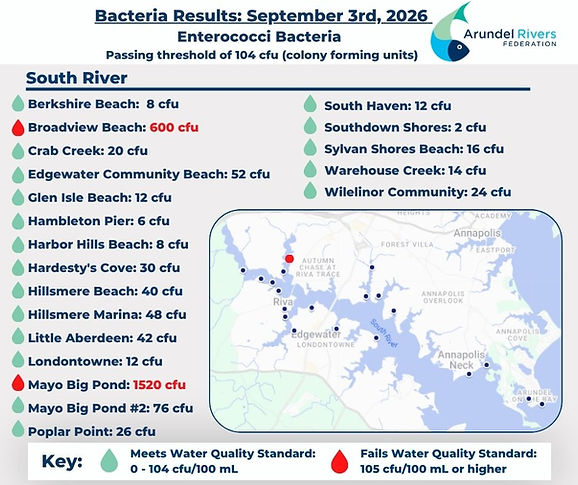
During the season, results are posted on our website and...

Swim Guide, via their website (theswimguide.org) or app

Arundel Rivers' social media (instagram or facebook)

Weekly email blast, sign up by contacting info@arundelrivers.org

Check out our bacteria monitoring lunch & learn video recording to dive even deeper into the ins and outs of our bacteria monitoring program. Hear from Elle Bassett (your South, West, and Rhode Riverkeeper), Tammy Domanski (Director of the Environmental Center at Anne Arundel Community College), and Riley Kuehn (Arundel Rivers' Monitoring Programs Coordinator).

What can you do?
Arundel Rivers recommends everyone follow the “golden rules” when considering swimming in our local waterways:
-
Do not swim after a major rain event
-
Do not swim with any open cuts or wounds
-
Always check Swim Guide prior to swimming
-
Always shower after swimming
To limit the amount of bacteria entering the waterways, make sure you:
-
Don't feed the geese! Geese and other waterfowl poop in the same place they eat. Goose poop can contain harmful bacteria, causing negative human health and environmental effects.
-
Pick up after your dog! Rain will wash dog poop into the waterway, and similar to goose poop, dog poop can cause infections in humans and pets. Scoop it and throw it away!


